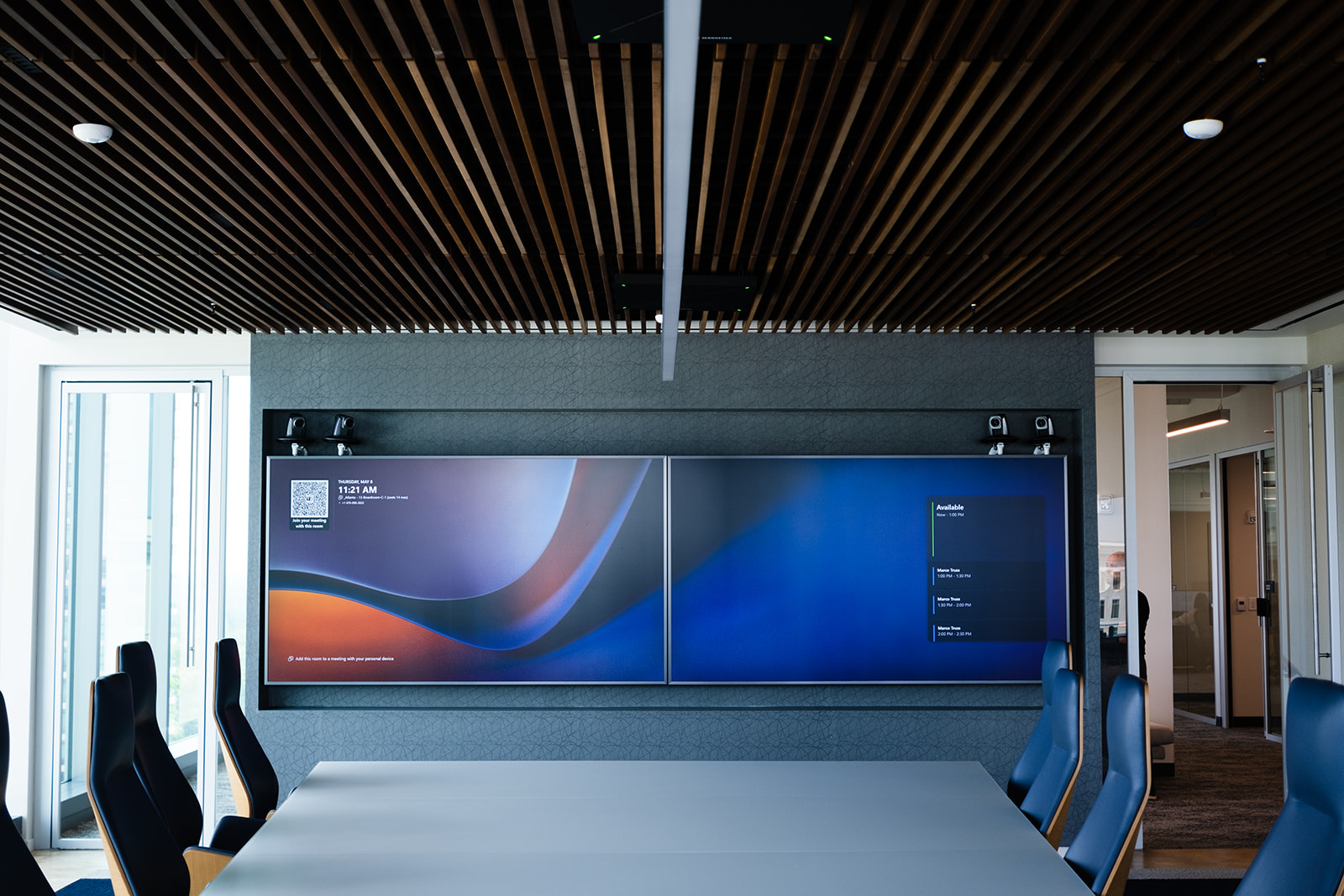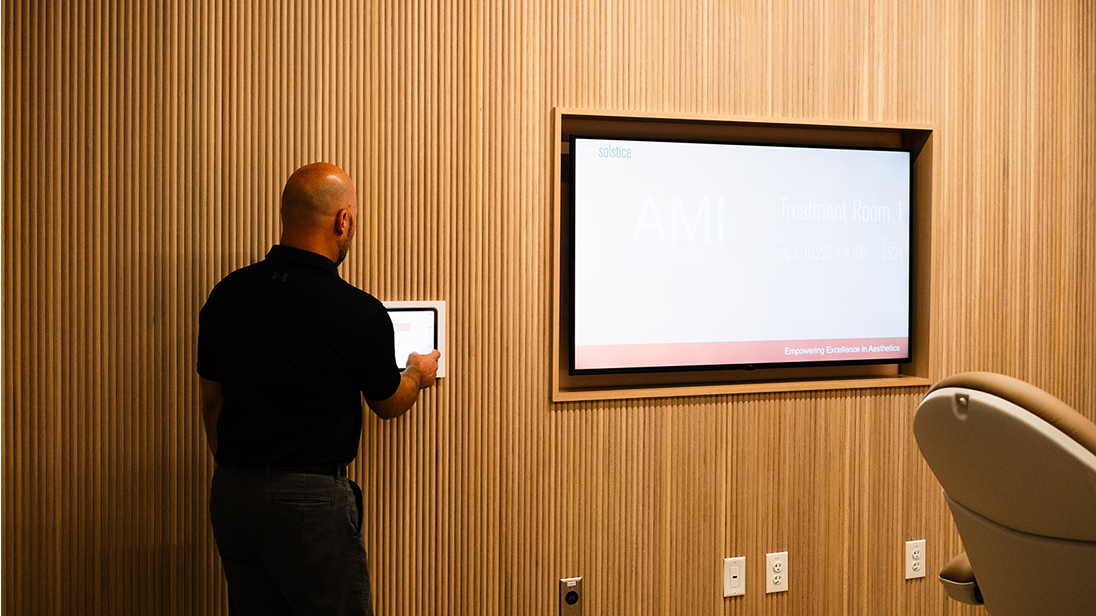

Many IT teams treat integrator selection and managed-services selection as two separate purchases. One vendor designs and installs the conference room technology. Another vendor gets hired later to keep it running. That split creates gaps in accountability, response time, and ownership when a system fails.
An AV integrator built for managed AV services closes that gap from day one. IT gets a single partner for design, install, and ongoing performance instead of two vendors trading responsibility back and forth.
What does an AV integrator do? A strong AV integrator designs, installs, and configures audio-visual systems for meeting rooms, boardrooms, and collaboration spaces. The best integrators extend that scope into operation — monitoring performance, resolving issues remotely, and maintaining systems across their full lifecycle to protect uptime for enterprise IT teams.
What an AV Integrator Actually Does Beyond Installation
An AV integrator handles design, engineering, procurement, installation, and programming for enterprise AV systems. That scope spans meeting rooms, boardrooms, training spaces, and broadcast-style environments across a portfolio of buildings and locations.
The strongest integrators carry that responsibility into operation. They monitor system health, catch failures before employees notice them, and maintains a culture of care and responsibility that continues well past the day the install crew leaves the building.
Why Splitting Integration and Management Creates Gaps
When integration and management sit with separate vendors, accountability splits along with them. A failure in a boardroom can trigger a debate over which vendor owns the fix while the meeting sits idle.
Enterprise IT teams feel this gap directly:
- Slower resolution — a support vendor without install context spends extra time diagnosing a system it never built.
- Duplicate vendor management — IT tracks two contracts, two escalation paths, and two sets of contacts for a single room.
- Warranty and service disputes — installer and manager point to each other when the root cause sits between their scopes of work.
- Repeat failures — the underlying design flaw rarely gets addressed because no single vendor owns the full picture.
What Managed AV Services Should Include From Day One
Managed AV services extend the integrator relationship past installation. Enterprise buyers evaluating a should expect these capabilities built into the engagement rather than sold separately later:
- Remote monitoring across every connected room
- Proactive alerts ahead of a failure reaching the user
- A single point of contact spanning design, install, and support
- Defined response times tied to a service agreement
- Lifecycle planning for hardware refresh and software updates
Building these into the original scope, rather than bolting them on after a failure, gives IT a support model that matches the pace of an enterprise meeting room portfolio.
How to Evaluate an AV Integrator’s Managed Capabilities
Enterprise buyers should ask direct questions before signing with any integrator claiming managed AV services capability:
- Does the integrator monitor systems remotely, or handle every issue case by case?
- What response time does the service agreement guarantee?
- Who owns lifecycle planning — the integrator, or an internal team piecing it together?
- How does the integrator report on uptime, tickets, and recurring issues?
The comparison betweenmodel come down to these same questions. An integrator answering all four with a documented process signals a partner built for ongoing ownership, rather than one focused on the install date alone.
How AV Tech Combines Integration and Management
AV Tech designs, installs, and manages enterprise AV systems as one continuous engagement, so there is no need for handoffs between separate teams. The same team that designs a boardroom stays accountable for how it performs six months and three years later.
That accountability includes built into every deployment, giving IT visibility into system health without waiting for a user complaint to surface a problem. According to AVIXA, the audio-visual industry’s standards body, integrators who build lifecycle support into their engagements deliver stronger long-term outcomes for enterprise clients than those offering installation alone.
Frequently Asked Questions
An AV integrator designs and installs AV systems. A managed AV services provider extends that relationship into ongoing monitoring, support, and lifecycle planning. An integrator built for managed services delivers both under one engagement.
Remote monitoring, proactive alerts, a defined response-time agreement, a single point of contact, and lifecycle planning for hardware and software all belong in a managed AV services engagement.
Ask about monitoring capability, guaranteed response times, ownership of lifecycle planning, and reporting on uptime and recurring tickets. A documented answer to each question signals a partner prepared for the full relationship, beyond the install.
Choose an Integrator Built for the Long Term
Enterprise IT teams shouldn't have to choose between an integrator who builds the system well and a vendor who keeps it running. AV Tech delivers both through a single engagement, from design through daily operation.
Contact AV Tech to talk about managed AV services built into your next AV integration.