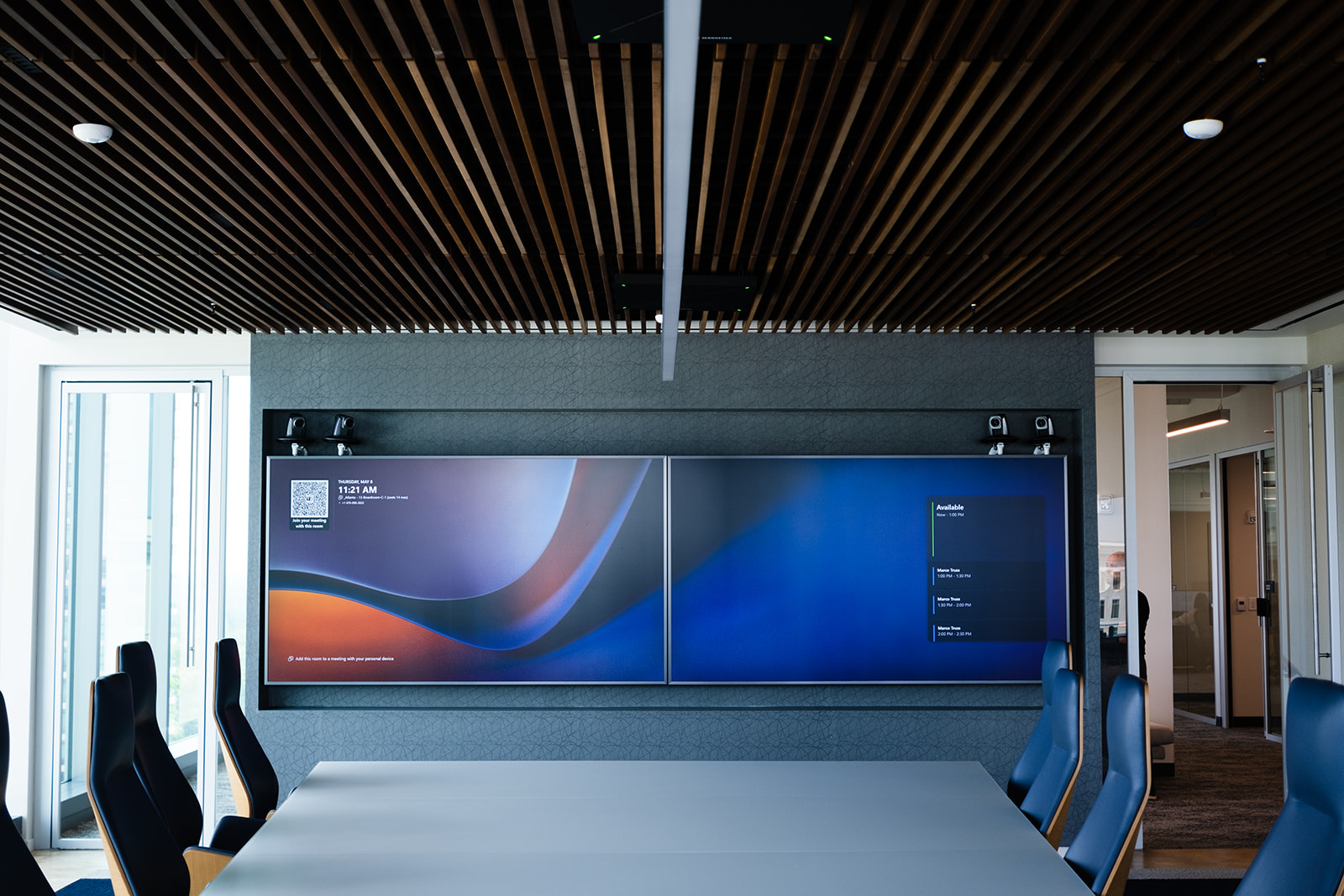
Audiovisual system design standards “grew up” outside of IT in most organizations. Conference rooms were built to solve immediate needs, often by different teams, at different times, with different assumptions. The systems worked well enough to move on, but that history is beginning to expose itself.
As AV has become more tightly connected to networks, security policies, and hybrid work, the lack of shared standards has become harder to ignore. CIOs see it when similar rooms behave differently, when support escalations stall because no one owns the system end-to-end, or when changes ripple unpredictably across environments.
The problem? It’s less likely that the AV is “unreliable” and more likely that it’s not treated as a cohesive ecosystem. That’s where AV system design standards come into play.
What Are AV System Design Standards?
AV system design standards define how audiovisual systems are architected, deployed, secured, monitored, and supported across an organization. They ensure consistency, scalability, and long-term operational reliability through standardized system architectures, consistent room typologies, centralized control and monitoring, network and security alignment, and lifecycle and support governance. Organizations use these defined standards to create repeatable conference room designs that IT teams can manage efficiently at scale.
In practice, they exist to answer questions that otherwise get resolved ad hoc. How should systems connect to the network? What level of monitoring is expected? Who approves changes? How are rooms expected to behave once they’re in production?
Without agreed-upon standards, those answers change from project to project, room to room.
Why CIOs Need AV System Design Standards
For many CIOs, AV only becomes visible when something goes wrong. A room behaves differently after a refresh, or a change request triggers unexpected side effects. Maybe something is pushed “up the chain” because a support issue crosses team boundaries with no clear owner.
These may seem like isolated failures, but they’re really signals that AV systems have grown without a shared framework and structure of support.
As audiovisual technology becomes more tightly integrated with networks, identity, and collaboration platforms, those gaps become harder to work around. Decisions made room-by-room begin to affect uptime, security posture, and support capacity. Over time, the cost adds up.
What “Standards” Mean in AV System Design
In an enterprise context, standards are about defining how systems are expected to behave and who “owns” their support, and that doesn’t always mean locking in products or prescribing how rooms should look. AV system design standards mean:
- Establishing architectural boundaries, integration requirements, and operational expectations
- Clarifying how systems connect to the network and what security entails
- Deciding who owns outcomes once a space is in use and how changes are approved
- Assigning responsibility for maintenance, service, and ongoing training.
Because they allow different spaces to serve different needs without introducing inconsistency at the system level, these standards sit closer to governance than to design preference.
Core AV System Design Standards Enterprises Should Define
Don’t worry about an exhaustive standards document to begin with; the first step is alignment on fundamentals.
That usually includes agreement on baseline system architecture, how rooms are categorized and related, what visibility IT has into system performance, and how documentation is maintained over time. These decisions shape how easily environments can be supported and how confidently changes can be made.
Approached this way, standards made it possible to scale AV without re-litigating the same decisions on every project. This system-level thinking is how we approach AV system design, where supportability and lifecycle planning are treated as design criteria rather than downstream concerns.
How AV System Design Standards Reduce Cost and Risk
AV environments get expensive when they drift. As systems change room by room, support teams lose their reference points. Teams must spend time figuring out what they’re looking at before they can fix anything, and changes require more validation because no one is certain what they might affect. In a worst-case scenario, even routine updates begin to carry hesitation.
Standards restore a baseline by giving IT something stable to manage against and allowing decisions to scale beyond a single project. That operational consistency is where cost control truly shows up, more so than in individual purchasing decisions.
How CIOs Can Get Started With AV System Design Standards
In practice, getting started with AV system design standards begins with establishing shared expectations. CIOs who approach this well focus first on clarity. Teams know what is standard, what is allowed to change, and what needs review before changes are made. That way of working is central to our perspective on AV system design, where standards keep systems coherent as they scale.
When room-by-room decisions start creating inconsistency or friction, that’s usually a signal to step back and look at the system as a whole. AV system design standards provide the structure needed to move from individual projects to a managed services environment.
To discuss how enterprise AV standards fit into your broader technology environment, contact us today.
Frequently Asked Questions
How should enterprises invest leftover budgets in commercial AV solutions?
Enterprises should invest leftover budgets in commercial AV solutions that improve meeting consistency, reduce support tickets, and support hybrid collaboration. This could take the form of standardized room systems, upgraded audio, intelligent cameras, or scalable infrastructure, SaaS monitoring, or a combination of these.
What is the difference between AV system design and conference room design?
AV system design focuses on the architecture, standards, and governance of audiovisual technology across an organization, while conference room design applies those systems to individual spaces. System design ensures consistency, scalability, and supportability across all rooms.
Are AV system design standards the same as AV products or brands?
No. AV system design standards define architectural principles, performance requirements, and governance rules. They intentionally avoid locking organizations into specific products or vendors so systems can evolve over time.
Who should own AV system design standards in an enterprise?
AV system design standards should be owned an AV expert assigned to IT leadership, with collaboration from facilities, and workplace teams. IT ownership, staffed with AV specialists, ensures alignment with network, security, monitoring, and support models.
Do AV system design standards apply to hybrid meeting rooms?
Yes. Hybrid meeting rooms rely on consistent audio, video, control, and monitoring systems. Without system-level standards, hybrid environments become unreliable and difficult to scale or support.
How often should AV system design standards be reviewed or updated?
Most organizations review AV system design standards every 12 to 24 months, or sooner if there are significant changes to workplace strategy, security requirements, or collaboration platforms. For organizations reassessing how AV fits into their broader environment, this often connects back to how workplace technology is planned and delivered in practice, such as through our Workspace Solutions.