
A commercial AV installation is not a simple “delivery and setup” job. For enterprise organizations managing complex environments — multiple floors, hybrid meeting infrastructure, and IT-integrated systems — it is a structured project with defined phases, stakeholder coordination, and technical commissioning requirements that determine whether the system performs as designed on day one and beyond.
Here’s a guide to what a professional commercial AV installation involves, what enterprise organizations should prepare for, and what separates an installation that holds up under daily use from one that generates support tickets within the first month.
What does a commercial AV installation involve?
A commercial AV installation covers the full process of deploying audiovisual systems in a business environment — from site survey and infrastructure preparation through equipment installation, control system programming, commissioning, and handoff. Enterprise installations also include IT network integration, UC platform configuration, documentation delivery, and end-user training.
Key phases include:
- Pre-installation site survey and infrastructure assessment
- Rough-in: cabling, conduit, structural mounts
- Equipment installation and rack build
- Programming, configuration, and IT integration
- Commissioning and user acceptance testing
- Documentation delivery and end-user training
What Commercial AV Installation Actually Involves
At the enterprise level, a commercial AV installation extends far beyond mounting displays and connecting cables. It includes structured cabling, network configuration, control system programming, DSP tuning, and integration with unified communications platforms.
This is where the difference between residential and commercial work becomes clear. Residential installs focus on hardware deployment. Enterprise AV installation requires coordination across IT, facilities, AV teams, and often construction partners. Systems must align with network policies, security requirements, and operational standards from the start.
Documentation is another defining factor. A professional installation delivers as-built drawings, signal flow diagrams, and equipment schedules that fit industry standards.
The Commercial AV Installation Process
A professional commercial AV installation follows a structured lifecycle. Each phase builds on the previous one, and compressing or skipping steps introduces risk that typically surfaces after go-live.
The process begins with a pre-installation site survey and infrastructure assessment. This validates infrastructure, identifies constraints, and ensures coordination with facilities or construction teams before work begins.
Next is the rough-in phase, where conduit, cabling, and structural supports are installed before walls close and ceilings are finalized. This is foundational work—errors here are difficult and expensive to correct later.
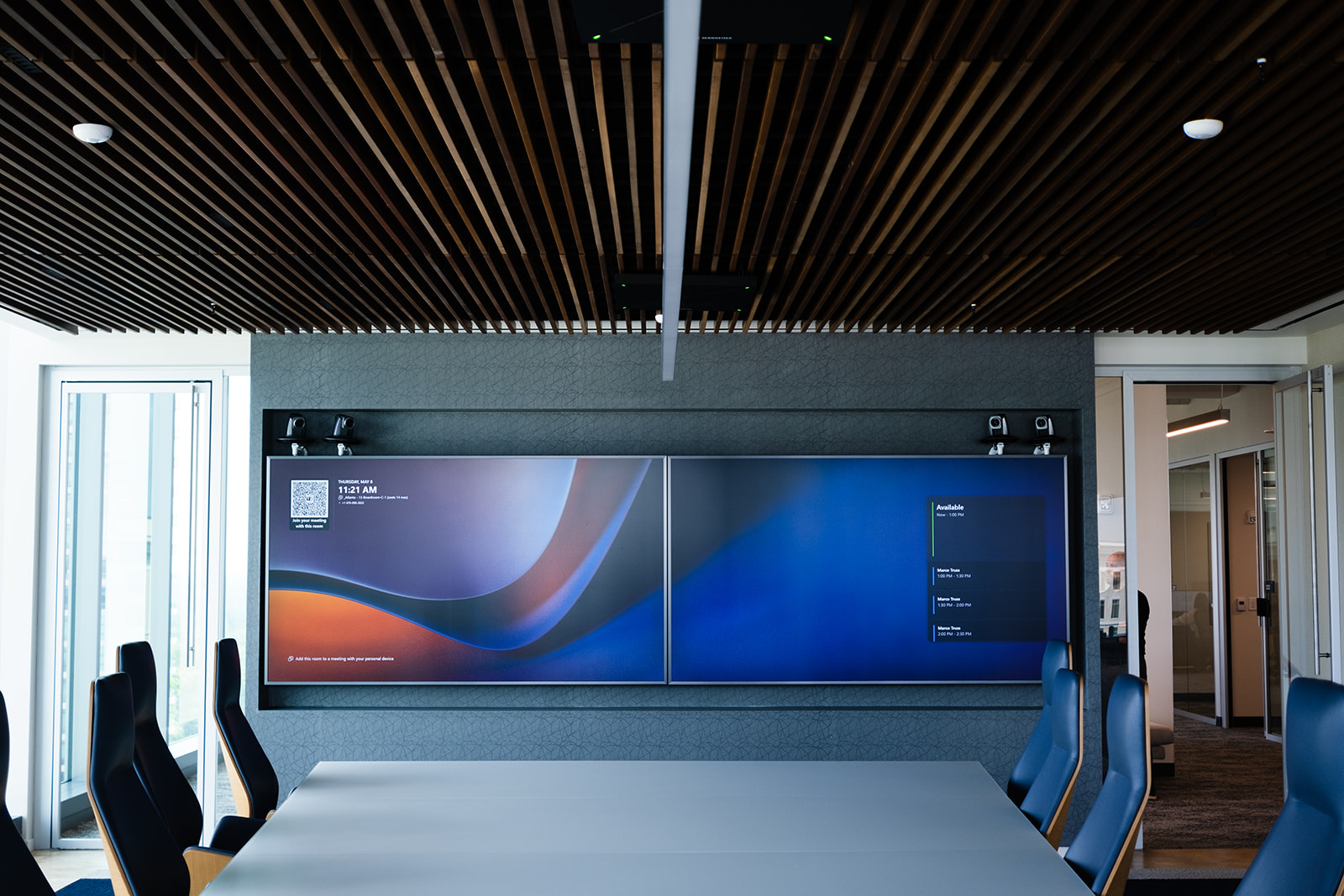
Once infrastructure is in place, equipment installation begins. Racks are built, displays are mounted, speakers are positioned, and cameras are installed. Precision at this stage directly affects system usability.
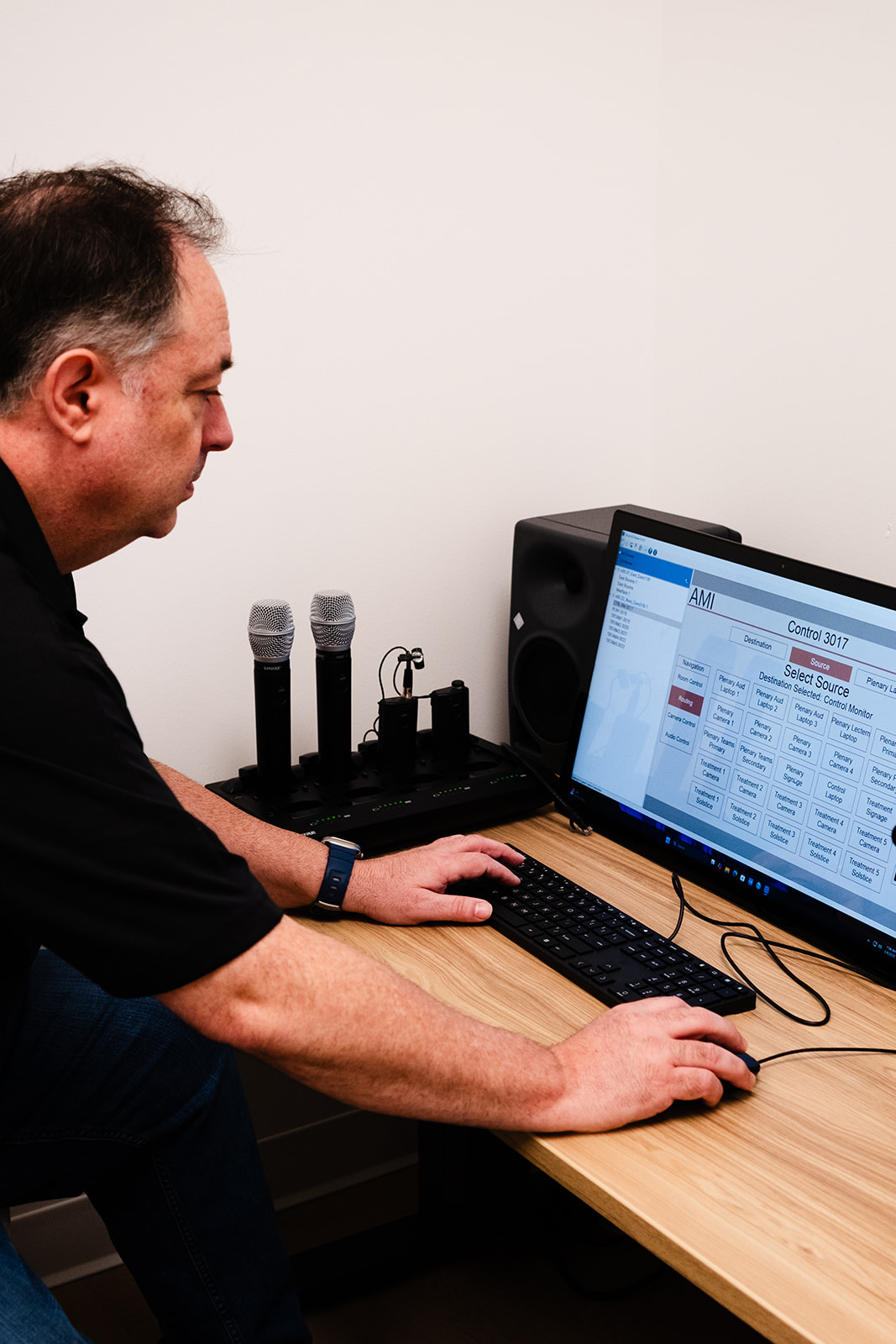
Programming and configuration follow. Control systems are programmed, DSP is tuned, UC platforms are integrated, and devices are configured on the network. This phase defines how the system actually functions for users.
Commissioning ensures the system performs as designed. Audio is calibrated, video is verified, and full system testing is completed before handoff.
The final phase is handoff. Documentation is delivered, IT teams are trained, and end users are onboarded. Without this step, even a properly installed system becomes difficult to support.
What Enterprise Organizations Need to Prepare Before Installation Begins
Installation success is determined before installation begins.
Network readiness is critical. VLANs must be configured, firewall rules approved, and PoE switch capacity confirmed. AV systems rely on stable, properly segmented networks.
Facilities coordination must also be complete. Power, conduit, ceiling access, and HVAC considerations need to be addressed before the AV team arrives. Delays here directly impact timelines.
Stakeholder alignment is equally important. IT, facilities, AV teams, and end users all play a role. Without clear ownership, projects encounter scope changes mid-installation.
Why Commercial AV Installations Fail — and How to Prevent It
Most failures are predictable. Skipping the site survey leads to incorrect assumptions that surface during installation. Poor IT coordination results in systems deployed without proper network configuration. Insufficient commissioning leaves performance issues unresolved. Missing documentation creates long-term support challenges.
Another common issue is choosing an installer without enterprise experience. Commercial environments require coordination, documentation, and IT integration that go beyond basic installation.
What to Look for in a Commercial AV Installation Company
Choosing the right commercial AV installation company determines long-term success. Above all, enterprise experience is essential because multi-room, multi-floor deployments require a level of planning and coordination that smaller projects do not.
IT/AV convergence capability is equally important. A qualified partner must handle network configuration, UC integration, and coordination with internal IT teams.
Strong project management ensures timelines, milestones, and stakeholders remain aligned throughout the process.
Post-installation support should be clearly defined. Systems must perform reliably, and when issues arise, response time matters. AV-Tech’s support model outlines what this should include. Local presence also plays a role. For organizations in Atlanta and across the Southeast, proximity improves response time and long-term system reliability.
Done right, a commercial AV installation is invisible. The system works, meetings start on time, and users don’t think about the technology behind it. Getting there requires more than good equipment. It requires a structured process, a qualified installation team, and a partner who understands that the install is the beginning of the relationship — not the end of it.
AV Tech Media Solutions manages commercial AV installations for enterprise organizations across Atlanta and the Southeast. From pre-installation planning through commissioning and ongoing support, the focus is ensuring systems perform as designed. Start planning your project with us today.
Frequently Asked Questions
How long does a commercial AV installation take?
Timeline depends on scope. A single conference room installation typically takes one to three days. A multi-room enterprise deployment across multiple floors or sites can run four to twelve weeks, with pre-installation infrastructure work often beginning weeks before equipment arrives on site.
What is the difference between commercial and residential AV installation?
Commercial AV installation involves IT network integration, control system programming, DSP configuration, and coordination with facilities and IT teams — none of which apply to a residential install. Commercial systems are also designed for continuous daily use by multiple users, which requires a different approach to equipment selection, mounting, cabling, and support.
What should I have ready before a commercial AV installation begins?
Network infrastructure should be confirmed ready: VLANs configured, PoE switches in place, firewall rules approved. Facilities work — power drops, conduit, ceiling access — should be complete before the AV team arrives. Stakeholder alignment across IT, facilities, and end users prevents scope changes mid-installation that delay commissioning.
Does a commercial AV installation company handle IT integration?
A qualified commercial AV installation company should handle IT integration as part of the scope — including network configuration, UC platform setup, and firewall coordination. Companies that treat IT integration as out-of-scope create handoff gaps that become support problems after go-live.